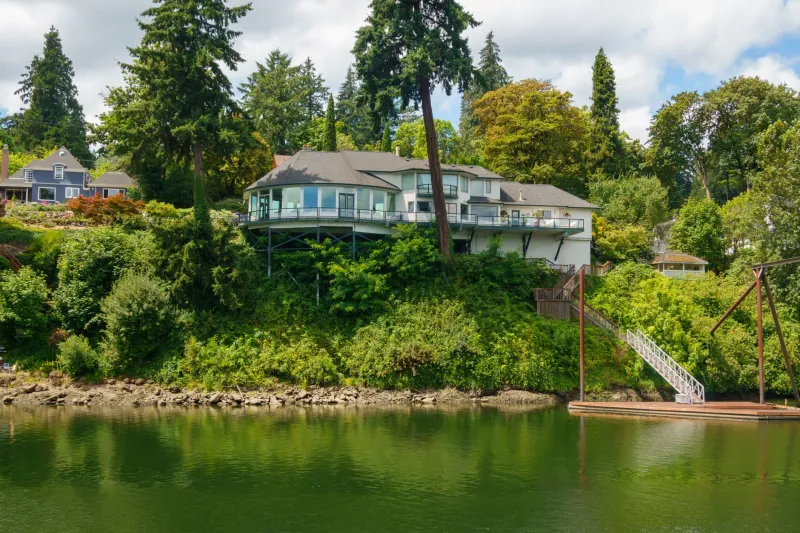
Seven Ways to Make the River Your Best Entertaining Asset
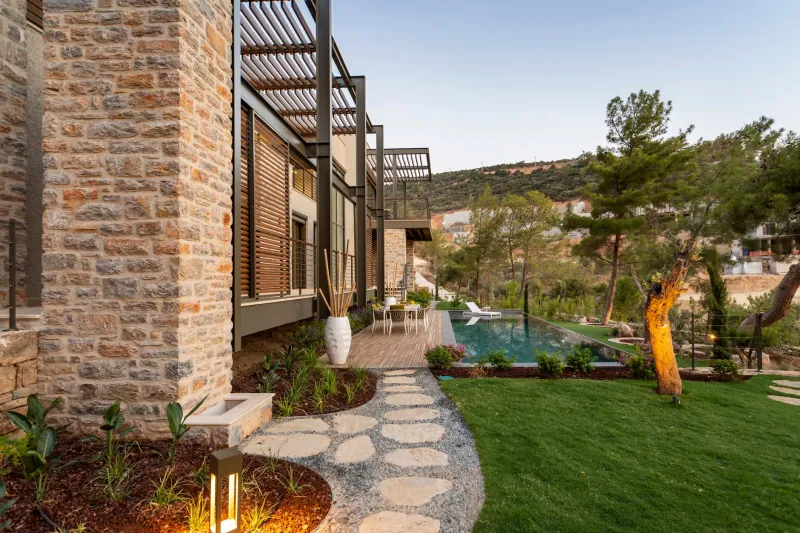
Ask a landscape architect what their best riverside projects have in common, and you'll rarely hear about square footage or furniture budgets. You'll hear about sightlines. The water, they'll tell you, should be treated like a stage — and every element of the outdoor program should be arranged to watch it perform.
Here are seven strategies we see again and again in the most successful riverside entertaining spaces.
1. Terrace the Ground Toward the Water
Flat yards waste a riverbank. The most elegant properties use gentle terracing — two or three broad stone steps down toward the water — so that every level has an unobstructed view and the landscape itself draws guests toward the river. Bluestone and granite treads weather beautifully in humid riverside climates.
2. Position the Pool to Borrow the River
An infinity-edge pool aligned with the river creates the illusion that the two bodies of water merge. On properties along the Willamette or the St. Johns, this visual splice is often the single highest-impact design decision a homeowner can make. Keep the pool's far edge visually quiet — no railings, no planters — to sell the effect.
3. Build a Fire Lounge That Faces Downstream
Fire pits are common; fire orientation is rare. Place the fire feature so seating faces the water, not a lawn. A low stone windbreak on the river side keeps flames steady in evening breezes while doubling as informal seating. The result is a room without a ceiling, open to the current.
4. Specify Materials That Survive Humidity
Riverside air is corrosive in ways coastal air is not — constant moisture, seasonal flooding, freeze-thaw cycles. Specify marine-grade stainless hardware, ipe or thermally modified ash decking, powder-coated aluminum frames, and natural stone over poured concrete, which cracks along flood-prone banks. Cheap materials fail on a river within three seasons.
5. Create an Outdoor Kitchen With a Working Wall
The best riverside kitchens aren't open pavilions; they have one solid wall that blocks prevailing winds and frames the view. A covered cooking wall — grill, prep counter, refrigeration — facing an open seating terrace toward the water keeps the chef in the conversation and the river in full view.
6. Light the Water, Not the Bank
Lighting is where riverside properties are won or lost. Downlights in trees create depth without glare; low-level path lights keep shorelines subtle. The crucial move: a few low, warm lights aimed at the water's surface itself. Moving water catches light like nothing else, turning the river into a nightly show that costs nothing to run.
7. Frame the View With Restraint
The instinct on a river property is to plant abundantly. Resist it. Use clipped hedges and single specimen trees — a river birch, a serviceberry — to frame the water rather than compete with it. Every planting should answer one question: does it improve the view, or block it?
The Common Thread
Every one of these strategies treats the river as the centerpiece and everything else as supporting cast. That's the discipline that separates a good riverside property from a great one — the willingness to let the water do the entertaining.