Water Levels and Long-Term Value: What Sophisticated Buyers Must Know Before Purchasing a Riverside Property

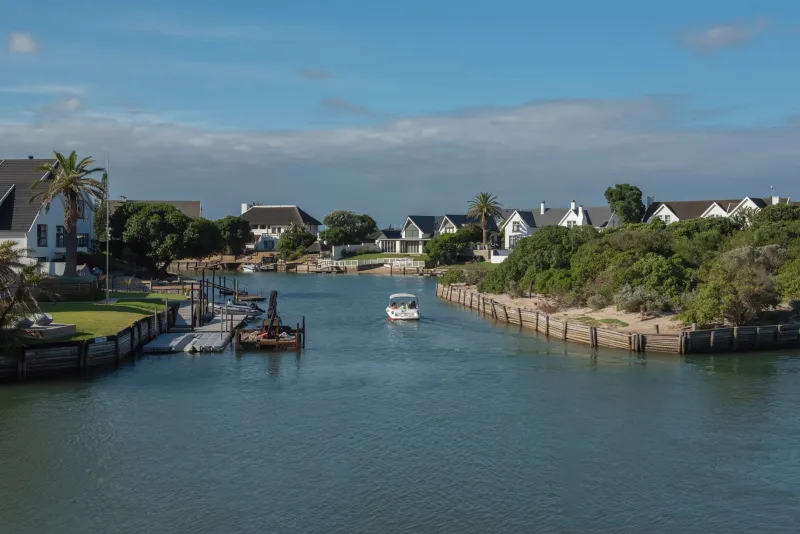
Photo by Photo by Bildstockru Master on Unsplash on Unsplash
Seasonal water fluctuation is among the most consequential — and most frequently underestimated — variables in any riverside property acquisition. For buyers operating at the upper tier of the market, a rigorous understanding of hydrological patterns, flood risk management, and climate-informed resilience planning is not merely prudent; it is the foundation of a sound long-term investment.
The river is not a static amenity. It breathes with the seasons, swells with upstream precipitation, and responds to decades of shifting climate patterns in ways that no standard property disclosure fully captures. What follows is a framework for evaluating these dynamics with the seriousness they deserve.
Understanding the River's Annual Rhythm
Every river system in the United States operates on a seasonal hydrological cycle that reflects its watershed's geography, climate, and upstream land use. The Missouri and upper Mississippi typically peak in late spring as snowmelt combines with spring rainfall across the northern plains. The rivers of the Pacific Northwest surge in winter and early spring, driven by atmospheric rivers and mountain snowpack. Rivers in the Southeast, fed by year-round rainfall, exhibit less dramatic seasonal swings but can respond violently to hurricane-related precipitation events.
For a prospective buyer, the first obligation is to understand the specific rhythm of the river in question — not in general terms, but with granular historical data. The United States Geological Survey (USGS) maintains a National Water Information System that provides decades of stream gauge records for thousands of monitoring stations nationwide. A qualified hydrological consultant can translate this data into practical terms: what is the typical annual high-water mark? How frequently does the 100-year flood elevation actually occur? What is the trend over the past 30 years?
These are not theoretical questions. They are directly material to the property's insurability, its long-term maintenance costs, and the resilience of any improvements on the parcel.
Flood Zone Classification and Its Implications
Federal Emergency Management Agency (FEMA) flood zone designations are the most widely referenced tool for evaluating flood risk in residential real estate transactions. Properties within Special Flood Hazard Areas (SFHAs) — commonly referred to as the 100-year floodplain — are subject to mandatory flood insurance requirements under federally backed mortgage programs and face additional scrutiny from private lenders.
However, sophisticated buyers should approach FEMA maps with a degree of analytical caution. Many flood zone maps have not been updated to reflect current hydrological conditions, and a property classified as Zone X (minimal flood hazard) today may face materially different risk exposure as climate patterns evolve. Independent flood risk assessments, conducted by licensed engineers using current topographic and hydrological data, are increasingly standard practice in high-value riverside transactions.
Beyond federal designations, state and local regulatory frameworks impose their own overlay requirements. Riparian buffer zones, shoreline setback ordinances, and state-level floodway regulations can significantly constrain future development or improvement of a riverside parcel. A thorough title and zoning review — conducted by counsel experienced in waterfront real estate — is an indispensable component of due diligence at this market tier.
Structural Resilience as a Design Imperative
At the luxury level, flood resilience is no longer a purely defensive consideration. The most forward-thinking architects and developers have reframed it as a design opportunity — a means of producing structures that perform beautifully under normal conditions and remain secure under extraordinary ones.
Elevated foundation systems — including pier-and-beam construction, reinforced concrete pilings, and helical pier foundations — lift primary living spaces above flood elevations without imposing the visual awkwardness of traditional raised construction. When executed with precision, these systems are architecturally invisible, presenting a home that appears grounded and composed at grade while its critical systems remain protected.
Flood-resistant materials — concrete, fiber cement, ceramic tile, and moisture-tolerant hardwoods — are increasingly specified in riverside luxury construction not merely for their durability but for their aesthetic qualities. The assumption that resilience demands compromise in finish quality is simply no longer accurate.
Mechanical systems deserve particular attention. HVAC equipment, electrical panels, and utility infrastructure located above flood elevation — or housed in purpose-built, watertight enclosures — dramatically reduce recovery costs following a high-water event. Smart home systems that enable remote monitoring of water intrusion, sump performance, and structural moisture levels add a further layer of protection for owners who may not be in residence during a weather event.
The Climate Variable: Thinking in Decades, Not Seasons
Any responsible evaluation of riverside property risk must now incorporate a long-horizon perspective on climate change and its hydrological implications. The scientific consensus — supported by data from the National Oceanic and Atmospheric Administration (NOAA) and the Army Corps of Engineers — points toward increased precipitation intensity, more frequent extreme weather events, and accelerated changes in seasonal runoff patterns across most of the continental United States.
For buyers, this means that historical flood frequency data, while valuable, is not sufficient on its own. Scenario-based risk modeling — which projects future flood probabilities under various climate trajectories — is an emerging standard in institutional real estate underwriting and is beginning to migrate into high-net-worth residential transactions.
Properties with natural resilience advantages — elevated topography, set-back positioning from the active channel, and robust riparian vegetation that slows erosion — will command increasing premiums as these dynamics become more widely understood by the broader market.
Insurance, Maintenance, and the Total Cost of Ownership
Flood insurance through the National Flood Insurance Program (NFIP) is often the only available option for properties in designated SFHAs, but its coverage limits — currently capped at $250,000 for the structure and $100,000 for contents — are wholly inadequate for luxury properties. Private flood insurance markets have expanded considerably in recent years, and sophisticated buyers should engage an insurance broker with specific expertise in high-value waterfront properties to structure coverage that reflects the actual replacement cost of the asset.
Beyond insurance, the annual maintenance obligations of a riverside property are meaningfully different from those of an inland estate. Dock inspection and seasonal maintenance, bank stabilization, riparian vegetation management, and periodic dredging of private waterway access are recurring cost centers that should be modeled explicitly in any acquisition analysis.
The river, managed intelligently, rewards its stewards handsomely. Approached with complacency, it is an asset that can erode in value as surely as its banks.